Cache Rules
Define which prompts, endpoints, projects, or workloads can reuse responses, with policies that balance speed, accuracy, privacy, and freshness across production AI applications.

Reduce repeated LLM calls, speed up user-facing AI experiences, and control inference spend with response caching built for production workloads. FastRouter helps teams reuse safe, high-quality outputs while maintaining observability, governance, guardrails, and routing flexibility across 100+ models through one OpenAI-compatible control plane.
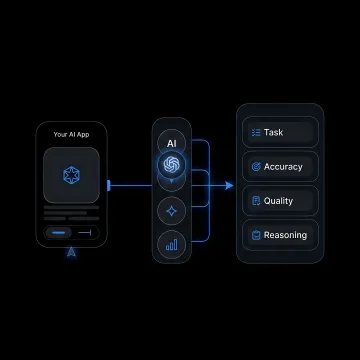
Response caching capabilities designed to reduce repeated inference while preserving production control, visibility, and governance.
Define which prompts, endpoints, projects, or workloads can reuse responses, with policies that balance speed, accuracy, privacy, and freshness across production AI applications.
Reuse outputs for repeated or similar requests to reduce unnecessary provider calls while preserving routing flexibility across OpenAI, Anthropic, Gemini, xAI Grok, and more.
Monitor cache hit rates, avoided token costs, latency improvements, and quality signals in unified dashboards alongside logs, alerts, and usage analytics.
FastRouter turns response caching into part of a broader LLMOps strategy, not a one-off optimization. Teams can reduce repeated inference, keep experiences responsive, and still maintain visibility into cost, latency, errors, and quality. Combined with routing, guardrails, evaluations, and governance across 100+ models, caching becomes a controlled way to scale AI products efficiently.
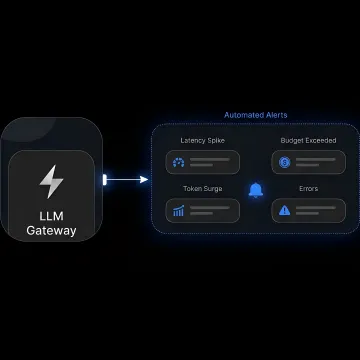
See how production AI teams can improve responsiveness, control spend, and scale model usage responsibly.
"Amazing product. Have had a great experience using FastRouter. Reliable access to models across providers helps removes the worry about outages or vendor lock-in."

"FastRouter is a good value add, specifically when you are not sure which LLM is better for your use cases. You can play around with models, can compare against them, and then use normal OpenAI compatible APIs call to leverage the full potential of it."

FastRouter combines caching strategy with the infrastructure teams need for dependable production AI.
One OpenAI-compatible control plane helps teams add caching without rebuilding provider-specific integrations.
Spend limits, usage analytics, and routing policies help convert cache savings into predictable budgets.
Logs, metrics, alerts, and evaluations show whether cached responses improve latency without hurting quality.
Automatic failover and model routing keep applications resilient when cache misses require live inference.
A platform team focused on production-ready LLM operations.
FastRouter is an LLMOps platform built to help engineering, product, and platform teams run generative AI reliably in production. Rather than forcing teams to maintain brittle provider-specific integrations, FastRouter offers a single OpenAI-compatible control plane for routing, observability, experiment tracking, guardrails, evaluations, governance, and cost visibility. Its approach is especially valuable for teams managing repeated model calls, high-volume inference, and multi-provider deployments where latency and spend can quickly become hard to control. Response caching fits naturally into that operating model: reduce unnecessary calls, measure impact clearly, and keep policies centralized as AI applications grow across teams and use cases.
LLM response caching stores suitable model responses so repeated or highly similar requests can be answered without calling a provider every time. That shortens response times, lowers token spend, and reduces dependence on premium models for repeatable workloads. In a gateway architecture, caching can work alongside routing, governance, logging, and guardrails instead of being embedded separately in every application.
Get practical guidance on latency, cost, routing, and cache strategy.

Built for reliable production AI operations.
Works with existing OpenAI SDK workflows.
Unified metrics, logs, evaluations, and alerts.
Tell us about your latency, cost, and throughput goals. We’ll help you evaluate caching opportunities and test FastRouter with free credits.
To help us assist you faster, please include the reason for your message so the relevant team can reach out as soon as possible.
To help us assist you faster, please include the reason for your message so the relevant team can reach out as soon as possible.