
With a dozen-plus providers and 100+ models sitting behind OpenAI-compatible endpoints, the wrong pick has real costs: blown monthly budgets, subscription bans, or agents that drop tool calls and forget their SOUL.md instructions halfway through a session.
This guide ranks the best OpenClaw models by use case (reasoning, coding, budget, long-context) and shows how smarter routing keeps you from overpaying for what your agent actually does.
Key Takeaways
- Top pick: GLM-5.2 leads hard agentic work with strong Terminal-Bench and SWE-Bench Pro scores plus a 1M-token context window
- Budget pick: MiniMax M3 has the lowest cost per token and reliable tool-calling
- Long-context pick: Kimi K2.5/K3 handles long-context, multi-step tool use
- Coding pick: Qwen3 Coder 480B A35B excels at coding-heavy agent work
- Never route Claude Code, Gemini CLI, or Codex subscription OAuth tokens through OpenClaw; use API keys or a model router instead.
Overview of AI Models for OpenClaw in 2026
OpenClaw is a local-first, always-on agent that connects messaging platforms like WhatsApp, Telegram, Slack, Discord, and iMessage to any OpenAI-compatible LLM. The Gateway component runs on your own machine, keeps session state in SQLite, and fires scheduled automations even when nobody's watching.
That local-first design turns model choice into a production decision, not just a config setting. A model that forgets instructions mid-thread or fumbles a tool call doesn't just annoy you; it burns tokens on retries and can silently skip the cron job you set up to run at 3 a.m.
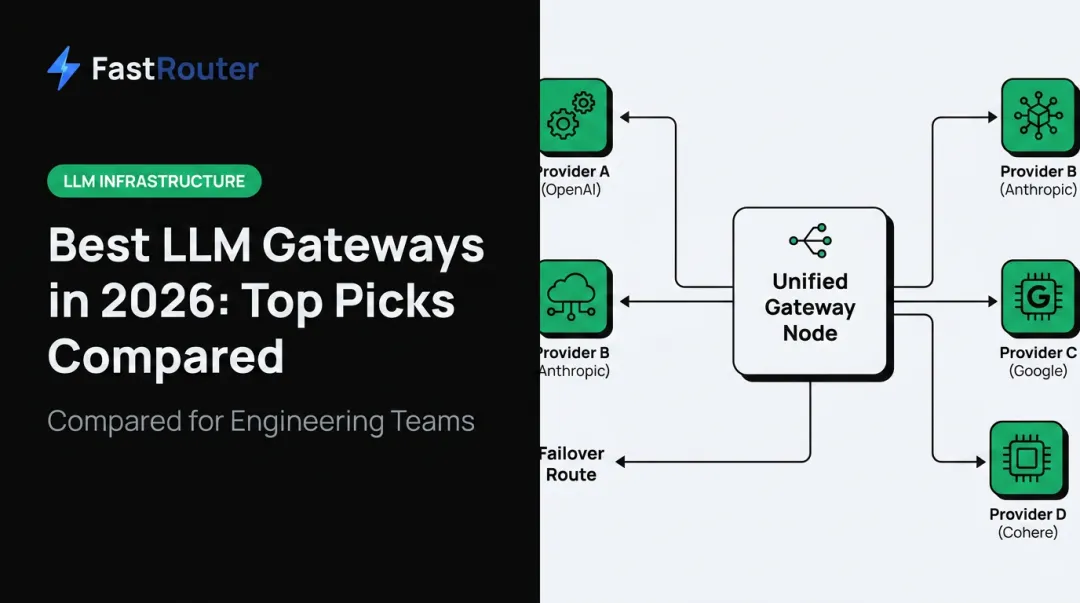
The ecosystem backing this decision is large. OpenClaw ships dozens of official provider plugins, plus support for any custom OpenAI- or Anthropic-compatible endpoint through its models.providers config, including unified gateways like FastRouter, which route a single OpenAI-compatible endpoint to 100+ models with automatic failover.

Repository stars alone don't measure active installs. But the trajectory tells a story: from creation in late 2025 to hundreds of thousands of stars within months, the self-hosting community around this pattern grew fast.
We ranked the models below using four criteria: tool-calling accuracy, instruction adherence across long sessions, context retention, and cost per completed task. Raw benchmark hype didn't make the cut on its own.
Top AI Models for OpenClaw in 2026
Each entry gets scored the same way: agentic benchmark performance (SWE-Bench, Terminal-Bench), how the context window behaves under real tool-call load, pricing per task rather than per token, and licensing or subscription-ban risk. All five models are available through FastRouter's unified API, so switching between them means changing a model name rather than rebuilding your integration.
GLM-5.2 (Z.AI)
GLM-5.2 is Z.AI's open-weight mixture-of-experts model, built specifically for hard agentic and coding workloads. It's available through the Z.AI API and via OpenRouter, so plugging it into OpenClaw doesn't require a special integration.
It leads open models on Terminal-Bench 2.1 with a score of 81.0, and posts 62.1 on SWE-bench Pro. In practice, that shows up as fewer dropped tool calls during long multi-step chains, and users running live shell and server-automation skills report lower hallucination rates than comparable open models.
| Spec | Details |
|---|---|
| Pricing | $1.40/M input, $4.40/M output ($0.26/M cached input). Z.AI's Coding Plan starts at $18/month for continuous workloads |
| Context Window | 1M tokens, up to 128K max output |
| Best For | Complex agent planning, coding-heavy skills, cron jobs that need reliability over hours |
MiniMax M3
MiniMax M3 is a sparse-attention open model positioned as the value default for agents that run all day but don't need frontier reasoning on every message. It's natively multimodal, so screenshot-based skills work out of the box.
At standard rates, M3 costs a fraction of GLM-5.2 while still posting 59.0% on SWE-Bench Pro and 66.0% on Terminal-Bench 2.1. Its 74.2% MCP Atlas score suggests it handles structured tool schemas better than its price tag implies.
| Spec | Details |
|---|---|
| Pricing | $0.30/M input, $1.20/M output for context under 512K (roughly $54/month for 100M input + 20M output tokens) |
| Context Window | Up to 1M tokens via sparse attention, with a 512K guaranteed minimum |
| Best For | Always-on chat, quick lookups, fallback model when rate limits hit |
Kimi K2.5 / K3 (Moonshot AI)
Moonshot's Kimi line is a trillion-parameter MoE family known for clean tool-call structure, the kind that keeps behavioral rules intact deep into a long thread. K2.5 is the workhorse; K3 pushes further on coding and web-heavy benchmarks at a real price jump.
K2.5 scores 46.8 on the Artificial Analysis Coding Index and 34.8 on Terminal-Bench Hard. K3 goes further on agent-specific tasks: 94.5 on MCPMark-Verified and 84.8 on OSWorld-Verified, with a full 1M context and no context management needed.
| Spec | Details |
|---|---|
| Pricing | K2.5: $0.60/M input, $3.00/M output. K3: $3.00/M input (cache miss), $15.00/M output, roughly 5x K2.5 |
| Context Window | K2.5: 262K tokens. K3: up to 1,048,576 tokens |
| Best For | Research agents, multi-agent orchestration, occasional hard coding marathons |
Qwen3 Coder 480B A35B
Alibaba's Qwen team built this MoE model specifically for code generation, PR review, and file-editing workflows, not general chat. If your OpenClaw agents primarily write or debug code rather than hold conversations, this is the clear pick.
Qwen's own release claims top-tier open-weight coding performance without relying on test-time scaling tricks. Combined with its price, that makes it one of the cheapest ways to run a coding-focused agent that still holds up on repo-wide tasks.
| Spec | Details |
|---|---|
| Pricing | $0.22/M input, $1.80/M output |
| Context Window | 256K native, extendable to 1M with YaRN |
| Best For | Coding agents, automated PR review, repo-wide debugging |
Claude Opus 5 / Sonnet 4.6 (Anthropic)
Anthropic's premium tier remains the most reliable option for tool-calling and instruction-following in production coding agents. Sonnet 4.6 delivers most of Opus 5's reliability at roughly a third of the cost, which makes it the better default for daily assistant work.
Sonnet 4.6 posts 80.2% on SWE-bench Verified. Opus 5 reportedly scores more than 2x Opus 4.8 on Frontier-Bench v0.1 and lands within 0.5% of the category's top CursorBench result at half the cost per task.
One catch: use API keys here, not a Claude Pro subscription. Anthropic's consumer terms bar automated, non-human access through subscription accounts, and The Register reported that Anthropic closed the door on subscription-based OpenClaw usage in April 2026.
| Spec | Details |
|---|---|
| Pricing | Opus 5: $5/M input, $25/M output. Sonnet 4.6: $3/M input, $15/M output. API-key only |
| Context Window | 1M tokens for both models |
| Best For | Mission-critical coding, daily assistant work where reliability beats raw cost |

Stop Overpaying: Multi-Model Routing and Cost Governance for OpenClaw
Leave OpenClaw on its default config and every heartbeat, sub-agent lookup, and one-line classification task routes through the same model handling your hardest coding sessions. That's expensive by design, not by accident. Nothing in a default setup tells the Gateway that a 3 a.m. health check doesn't need a frontier model.
The fix is tiering the work by complexity, not treating every task the same:
- Frontier tier: Complex reasoning and hard coding sessions go to GLM-5.2 or Claude Opus 5
- Mid tier: Daily assistant work goes to Sonnet 4.6 or Kimi K2.5
- Economy tier: Heartbeats, cron pings, and simple lookups go to MiniMax M3 or similar
Amazon's own testing with Bedrock's intelligent prompt routing found savings of 48-56% when routing between a low-cost and stronger model, and average savings of 63.6% across open and internal datasets, with 87% of prompts landing on the cheaper model while accuracy held steady, according to AWS's Bedrock documentation.
The exact number varies by workload, but the direction is consistent: most of what an always-on agent does doesn't need the expensive model.
The problem is that tiering manually means wiring a dozen separate provider configs and API keys directly into openclaw.json, and even then you have no centralized view of spend, latency, or failures across providers. When Kimi rate-limits you at 2 a.m., you find out because your agent went silent, not because a dashboard flagged it.
This is the exact gap FastRouter is built to close. It's a single OpenAI-compatible control plane that sits behind OpenClaw's models.providers config, unifying routing across 100+ open and proprietary models behind one endpoint instead of a dozen. FastRouter ships a dedicated OpenClaw Skill that routes agent runs through the gateway, unlocking:
- Real-time cost tracking by project, user, or API key
- Automatic failover when a provider hits a rate limit or outage
- Unified observability across every model your agents touch, not just one provider's dashboard
That failover piece matters more than it sounds. Fallback chains only protect you if they span providers, not just models within one provider. If Moonshot has an outage, falling back to a different Kimi variant doesn't help. A chain that spans Z.AI, MiniMax, and Anthropic does.

How We Chose the Best Models
Benchmark leaderboards make for good marketing, but they don't tell you what happens when your agent's fourth tool call in a session gets malformed.
We weighted tool-calling accuracy and long-session instruction adherence over headline scores. A model that fumbles a structured function call forces a retry loop, and retry loops are where budgets quietly disappear.
Two mistakes show up constantly in OpenClaw communities:
- Chasing the highest SWE-Bench number without checking cost per completed task. A model that scores five points higher but needs three retries to get a clean tool call isn't actually cheaper or faster in production.
- Routing subscription OAuth tokens through OpenClaw. Providers monitor for automated usage patterns on consumer accounts, and the risk isn't hypothetical: Anthropic briefly suspended OpenClaw's own creator over suspicious activity tied to third-party harness usage in April 2026.
Both mistakes trace back to the same root cause: optimizing for a single metric instead of total cost of ownership.
Context window size and pricing tier factor into whether a model is viable for a 24/7 workload, and licensing terms often decide it outright — not just whether it wins one benchmark chart.
Conclusion
There's no single "best" model for OpenClaw in 2026. The right pick depends on your workload: heartbeats, daily assistant chats, coding agents, or long-context research sessions. Most serious setups end up running two or three models simultaneously, tiered by task.
Given that mix, test models against your actual task distribution before committing to one. Set fallback chains that span providers. Track cost per completed task, not just per token, and revisit that number every time a provider ships a new release.
If you're tired of juggling separate provider configs, API keys, and dashboards for every model in your stack, FastRouter gives you one control plane to route, observe, and govern costs across all of them. Your OpenClaw agents stay fast, reliable, and within budget.
Frequently Asked Questions
What is the best AI model for OpenClaw in 2026?
It depends on the workload. GLM-5.2 suits hard agentic and coding tasks, MiniMax M3 fits budget always-on use, and Kimi K2.5 works best for long-context research.
Can I use my Claude Pro or ChatGPT subscription with OpenClaw?
Routing subscription OAuth tokens through an automated tool like OpenClaw risks account suspension, since providers monitor for non-human usage patterns. API keys are the safer path.
What is the cheapest way to run OpenClaw 24/7?
Budget open models like MiniMax M3, combined with model tiering for heartbeats and sub-agents, typically cut monthly costs by 50-80% compared to running a single premium model for everything.
Which model is best for coding tasks in OpenClaw?
Qwen3 Coder 480B A35B leads open-weight coding benchmarks for the price. Claude Opus 5 remains the top proprietary pick for complex multi-file debugging where reliability outweighs cost.
How do I switch models in OpenClaw without restarting the gateway?
Use the /model command for on-the-fly session switches. Permanent changes still require editing your config and running openclaw gateway restart.
Do I need a model router for OpenClaw?
A router becomes valuable once you're juggling multiple providers or need cross-provider fallback for reliability. Platforms like FastRouter add centralized cost governance and usage visibility across every model in your OpenClaw stack.