
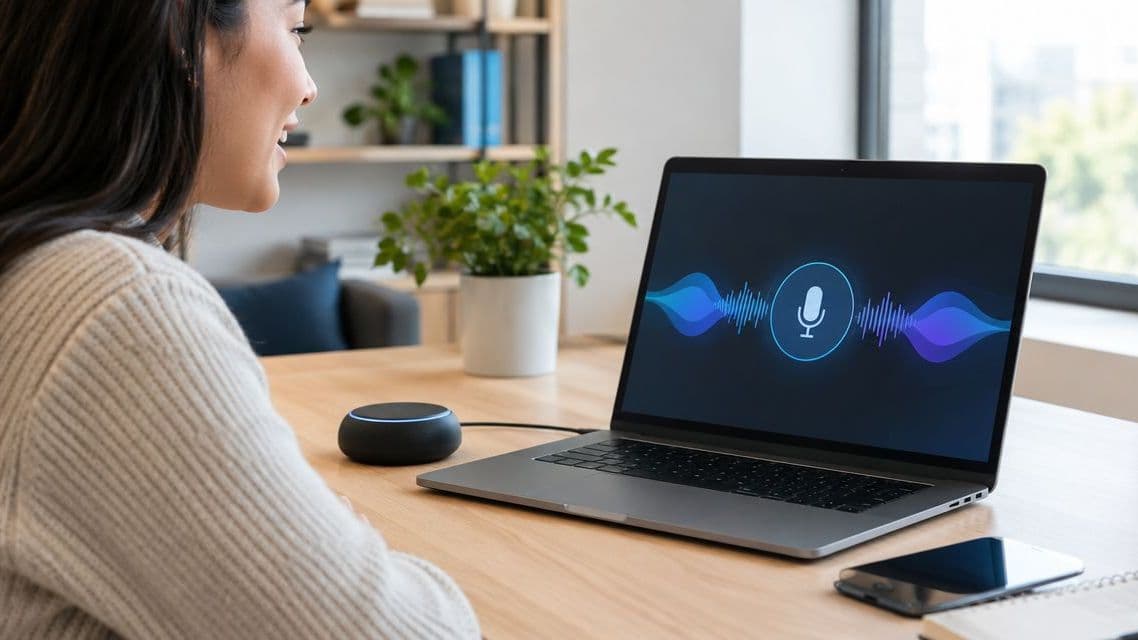
Can an LLM gateway support realtime voice over WebSocket?
An LLM gateway supports realtime voice over WebSocket with explicit audio protocol support. Check session control, interruptions, and recovery first.
Yes. An LLM gateway can support realtime voice over WebSocket when it explicitly supports the provider’s realtime protocol, audio events, and session lifecycle—not just streamed text responses. Production readiness also requires tested interruption handling, credential management, and reconnection behavior; an open socket alone does not establish voice compatibility.
TL;DR
- WebSocket support enables realtime voice only when the LLM gateway also handles the required audio protocol and session events.
- OpenAI-compatible text requests do not establish compatibility with a realtime voice session.
- FastRouter includes a Realtime API over WebSocket; voice-specific behavior requires validation against the intended application.
- Test interruption, disconnects, and session recovery before approving a realtime voice deployment.
Why this matters
A voice application has to manage an ongoing conversation, not simply return a completed answer. Audio capture, model responses, playback, and interruptions interact throughout the session. A transport mismatch can leave a connection open while the conversation fails.
For a 2026 deployment, the acceptance criterion is working conversational behavior under normal operation and failure—not a gateway’s general model catalog. The LLM router guide for platform engineering teams provides related context on routing architecture; realtime voice needs an additional protocol-specific review.
Can an LLM gateway support realtime voice over WebSocket?
Yes, provided the gateway supports the actual realtime API rather than treating WebSocket as a generic transport. WebSocket provides bidirectional communication. The application protocol defines what the exchanged messages mean, including session configuration, incoming audio, generated audio, errors, and completion events.
The distinction matters when evaluating these implementation patterns:
Implementation pattern | Best for | Main advantage | Main limitation |
|---|---|---|---|
Text streaming | Applications that display generated text | Incremental text delivery | Does not establish audio input or audio output support |
Separate speech pipeline | Applications needing independent transcription, generation, and speech components | Components can be evaluated separately | Application must coordinate intermediate results and playback |
Realtime voice over WebSocket | Interactive applications requiring bidirectional audio events | A persistent channel carries the conversation protocol | Requires session-aware integration and failure handling |
These are architectural options, not interchangeable compatibility labels. A gateway supporting ordinary chat requests is not automatically a realtime voice gateway, and a realtime connection does not automatically include every capability of the underlying provider.
Text streaming is not realtime audio
Incremental text output can feed a speech synthesis component, but that creates a pipeline with separate boundaries. The application still has to coordinate transcription, generated text, synthesized audio, cancellation, and playback state.
That architecture remains a valid choice when independent component control matters. It should not be described as native realtime voice merely because the final output is spoken.
WebSocket is transport, not a feature checklist
A successful connection proves that the transport handshake worked. It does not prove that the gateway forwards the required events, accepts the expected audio encoding, or supports the application’s interruption behavior.
Protocol compatibility must be tested at the event level. Connection establishment belongs at the start of the acceptance test, not at the end.
What must the gateway and application handle?
The gateway’s documented interface and the application’s responsibilities should be reviewed separately. A gateway can expose a realtime connection while leaving audio capture, playback, and conversation recovery to the application.
Audio format and session configuration
The integration needs agreement on accepted audio formats and session settings. The application must send the structure expected by the supported realtime interface, rather than assuming that a text client’s existing configuration carries over.
Before implementation, record the required input format, output format, supported modalities, and session configuration events. Treat each as an explicit compatibility requirement. Do not infer voice support for every model listed in a gateway’s general catalog.
Conversation state and interruptions
Spoken interaction requires a policy for what happens when a person speaks during generated playback. Stopping the speaker and stopping server-side generation are separate actions; the application needs defined behavior for both.
Conversation state also needs a clear owner. The integration should specify which component records committed turns, which component tracks unfinished audio, and what context survives a reconnect. Otherwise, recovery can repeat an answer or preserve content that the listener never heard.
Credentials and connection ownership
A browser or mobile client should not receive a long-lived privileged gateway key. The architecture should use a backend relay or a documented client-safe authentication mechanism appropriate to the service.
Neither mechanism should be assumed to exist solely because WebSocket is supported. Credential scope, expiration, revocation, and connection ownership belong in the implementation review before a public client is connected.
Playback and resource management
Audio generation and playback do not necessarily progress at the same rate. The application needs bounded queues and a defined response when playback falls behind, the listener interrupts, or the network connection degrades.
Unlimited buffering is not a recovery strategy. The implementation should distinguish audio awaiting playback, audio already played, and audio discarded after cancellation so that conversation history remains consistent with the listener’s experience.
How should a realtime voice session be tested?
A 2026 acceptance plan should follow the session lifecycle and record observable outcomes at each stage. The following sequence tests behavior without assuming an undocumented endpoint, event name, or SDK method.
- Authenticate. Establish the connection with the intended credential flow. Reject invalid credentials and confirm that privileged secrets remain outside public clients.
- Configure. Apply the required session settings. Confirm that unsupported settings produce a visible error rather than an unnoticed change in behavior.
- Exchange audio. Send valid audio and confirm that returned events can drive the intended playback implementation. Check text or tool events separately when the application requires them.
- Interrupt. Speak during generated playback. Confirm that cancellation, queued audio, and recorded conversation state follow the application’s policy.
- Reconnect. Break the connection deliberately. Confirm that the application detects the disconnect, establishes a new session when appropriate, and restores only the intended context.
The test record should preserve expected behavior, observed behavior, and the component responsible for each failure. A silent client, a rejected audio event, and a disconnected upstream session are different failures; combining them under a single connection error obscures the fix.
Repeat the sequence with realistic application audio rather than only a synthetic connection check. Include silence, interrupted speech, delayed playback, and network loss. The goal is evidence that the conversation remains understandable and recoverable, not merely that messages pass through a socket.
Why realtime voice behavior varies
Realtime performance depends on the full audio path. A gateway cannot establish conversational quality independently of the client, network, provider, and application logic.
- Audio capture and encoding. Microphone handling and format conversion affect when usable input reaches the session.
- Network path. Client connectivity and the route to upstream infrastructure contribute to elapsed response time.
- Turn detection. The chosen mechanism for deciding when speech ends affects when generation begins.
- Model and provider behavior. The selected realtime service determines the supported event contract and generation behavior.
- Playback buffering. Queued audio affects when generated speech becomes audible and how quickly an interruption takes effect.
- Recovery policy. Reconnection and context restoration determine what happens after a session stops unexpectedly.
Measure separate milestones rather than publishing a single undifferentiated latency figure. Useful application measurements include connection establishment, end of speech to first audible response, cancellation to playback stop, and time to recover from a disconnect.
For a 2026 evaluation, report the test conditions alongside those measurements: client environment, network path, selected service, and interruption policy. Without that scope, a latency result does not explain what another deployment should expect.
Where FastRouter fits
FastRouter is an LLM gateway for enterprise teams that need WebSocket realtime access alongside routing, evaluations, observability, and governance. It includes a Realtime API over WebSocket and an OpenAI-Compatible API. Those are distinct capabilities; compatibility with ordinary text requests should not substitute for testing the realtime interface.
FastRouter provides access to 200+ models across 20+ providers and seven Provider Routing Strategies. These are gateway-wide capabilities, not a claim that every model, provider, or routing strategy supports realtime voice. The realtime deployment should be scoped to the specific supported interface and intended workload.
The advantage is a gateway that also includes BYOK, Projects, Role-Based Access Control, Tracing, and Evaluations. The boundary is equally important: the presence of those features does not establish how each interacts with an active voice session. Session-level routing, payload visibility, credential handling, and recovery behavior require their own validation.
For a 2026 architecture decision, approve the voice integration on demonstrated protocol behavior—not on the size of the general model catalog. No gateway overhead or voice response-time guarantee follows from the confirmed capabilities above.
Does an OpenAI-compatible API guarantee realtime voice support?
No. OpenAI compatibility for text requests does not establish support for realtime audio events or WebSocket session configuration. The realtime interface needs an independent compatibility check covering authentication, event handling, audio formats, and interruption behavior.
Can automatic failover preserve an active voice conversation?
Automatic failover does not, by itself, establish active-session continuity. Preserving a conversation requires a defined policy for reconnecting, restoring context, and handling audio that was generated but not heard.
Request routing and voice-session recovery are separate acceptance criteria. A successful retry of an ordinary request is not evidence that a partially completed spoken exchange can resume unchanged.
Is WebSocket enough for a production voice application?
No. WebSocket supplies a communication channel, while production voice also requires working audio handling, session control, authentication, observability, and recovery. A deployment review should test those responsibilities across the application and gateway rather than assigning them implicitly to the transport.
FAQ
Can an LLM gateway handle realtime voice over WebSocket?
Yes, when the gateway explicitly supports the required realtime audio protocol and session events. Ordinary text streaming or a successful WebSocket connection does not establish full voice compatibility.
Does FastRouter support a realtime WebSocket API?
FastRouter includes a Realtime API over WebSocket. The intended voice workflow still needs validation for audio formats, authentication, interruptions, and session recovery.
Can every model behind a gateway handle realtime audio?
No. A gateway’s general model catalog does not establish realtime audio support for each model. Validate the specific realtime service and interface selected for the application.
Can a voice assistant switch providers in the middle of a call?
Mid-session provider switching requires explicit support for conversation recovery and audio-state handling. General routing or failover support does not establish transparent switching during an active conversation.
Is streamed text the same as realtime voice?
No. Streamed text delivers incremental text output; realtime voice requires audio handling and a conversation protocol. A separate speech pipeline can combine transcription, text generation, and speech synthesis, but the application must coordinate those components.
What should a realtime voice gateway test measure?
A realtime voice test should measure connection establishment, speech-to-audible-response timing, interruption handling, and disconnect recovery. Report the client, network, selected service, and test conditions alongside the results.
Should a browser contain a privileged gateway API key?
No. Long-lived privileged credentials should remain outside public clients. Use a backend relay or a documented client-safe authentication mechanism supported by the service.
One last thing
The most revealing 2026 acceptance test is an interrupted answer followed by a dropped connection. After reconnecting, compare the restored conversation with what the listener actually heard—not just what the model generated.
Unheard audio must not silently become accepted conversation history. Define that boundary before release, and test it whenever the realtime integration changes.
Related guides
Related Articles
Does an LLM gateway support virtual model aliases?
LLM gateway virtual model aliases keep application names stable as model targets change. Learn how aliases differ from routing and what to validate.

Can an LLM gateway weight traffic across providers automatically?
Can an LLM gateway weight traffic across providers automatically? Yes. Compare weighted routing, failover, and the checks needed for production traffic.
Can an LLM gateway route requests by category automatically?
Can an LLM gateway route requests by category automatically? Yes. Compare routing methods, define fallback rules, and validate task quality before rollout.