
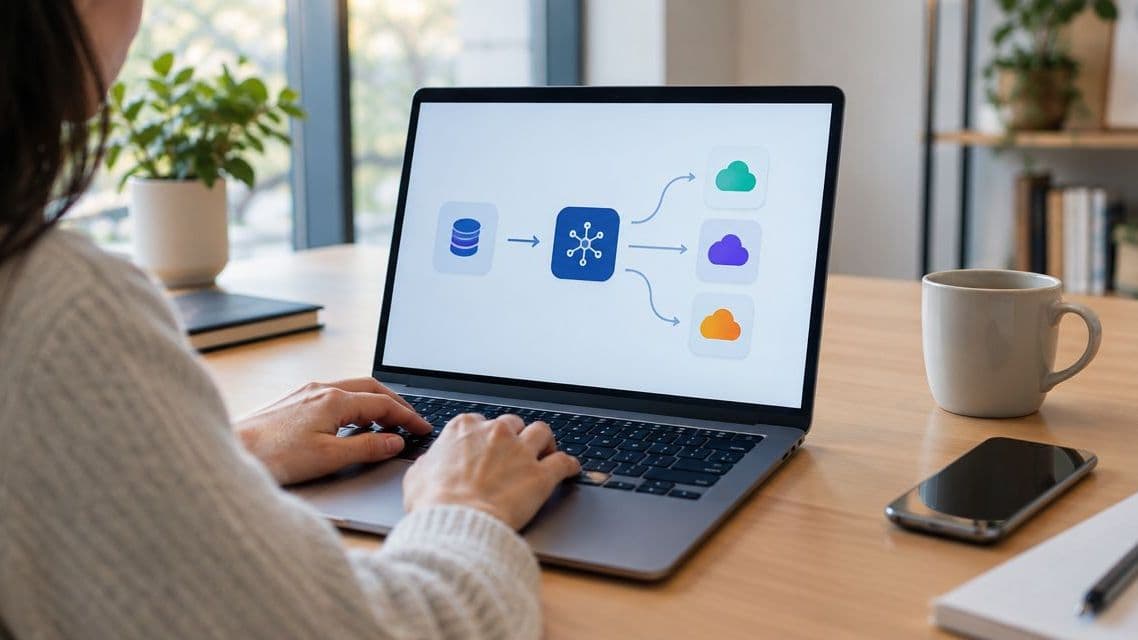
Can an LLM gateway route embedding requests to multiple providers?
An embedding API gateway can route across providers. Learn how to verify endpoint support, preserve vector compatibility, and test retrieval safely.
Yes. An LLM gateway can route embedding API requests to multiple providers when it explicitly supports their embedding endpoints, request formats, and authentication. The critical constraint is vector compatibility: switching providers must not silently switch the embedding space used by an existing search index. A shared API format does not make different embedding models interchangeable.
TL;DR
- An embedding API gateway can route across providers, but endpoint support must be verified separately from chat support.
- Embedding failover must preserve the model contract and vector space expected by the destination index.
- Different embedding models need separate indexes and retrieval evaluations before a production migration.
- FastRouter supports enterprise LLM routing; embedding endpoint coverage requires separate verification before deployment.
Why this matters
Embedding routing affects retrieval correctness, not just request delivery. A gateway can return a successful response while the resulting vectors produce irrelevant search results against an incompatible index.
For a 2026 architecture review, separate transport compatibility from retrieval compatibility. The guide to using the same API format across different LLM providers addresses the interface question; embedding deployments also require a stable relationship between document vectors and query vectors.
A successful embedding request is not proof of a correct retrieval system. Production acceptance must include search results, failure behavior, and index integrity—not merely an HTTP success response.
Can an LLM gateway route embedding requests to multiple providers?
Yes, provided the gateway implements embedding requests as a supported operation. The routing layer must recognize the requested model, select an eligible provider, translate supported parameters where necessary, and return vectors in the response structure expected by the application.
Multiple-provider routing has several distinct meanings. Selecting between equivalent deployments is different from selecting between unrelated embedding models.
Routing pattern | Best for | Main benefit | Main constraint |
|---|---|---|---|
Same model across validated deployments | Continuity for an existing index | Changes serving infrastructure without an intended model change | Deployment equivalence still requires testing |
Different models with separate indexes | Model evaluation and migration | Allows independent retrieval comparisons | Requires separate indexing and query routing |
Different models into an existing index | Only an explicitly validated shared embedding space | Avoids a separate index when compatibility genuinely exists | Matching vector dimensions alone does not establish compatibility |
The gateway should reject an unsupported embedding route rather than silently substitute a chat model or an unapproved embedding model. An explicit failure is easier to diagnose than an apparently healthy search service returning degraded results.
Confirm endpoint support independently
A gateway's model catalog does not establish embedding support. Neither does an OpenAI-compatible chat interface.
The acceptance test must exercise an actual embedding operation through the intended client library. It must verify input handling, model selection, authentication, returned vectors, and error responses. A generic statement that a gateway supports multiple providers leaves these implementation details unresolved.
Preserve the embedding contract
An embedding contract describes what the retrieval pipeline expects from its vectors. It includes the embedding model and revision, output dimensions, input preparation, normalization behavior, and the similarity configuration used by the index.
Equal vector length does not mean equal vector meaning. Independently trained models can place the same text in different regions of their respective embedding spaces. Directly comparing those vectors does not establish meaningful semantic similarity merely because their shapes match.
Document and query encoders must follow the intended model pairing. Some retrieval systems deliberately use different query and document instructions or paired encoders; consistency means following that documented design, not forcing identical preprocessing everywhere.
Treat aliases as controlled contracts
A logical model alias can keep application configuration stable, but its underlying destination must remain compatible with the index. An alias that silently changes embedding families hides a data migration inside a routing change.
Record the resolved embedding configuration alongside indexed content. When the configuration changes, the retrieval system needs enough metadata to identify which documents require re-embedding and which query path belongs to each index.
Keep caches model-aware
An embedding cache must distinguish requests that use different model contracts. Caching only by input text risks returning a vector generated under an incompatible configuration.
The cache key should account for the model identity, relevant parameters, preprocessing version, and tenant boundary where applicable. Cache invalidation belongs in the migration plan, not in post-release troubleshooting.
Choose the routing pattern deliberately
For a 2026 deployment, the right pattern depends on whether the goal is operational continuity, retrieval improvement, or workload separation. Those goals need different safeguards.
Same-model routing
Best for: maintaining an established retrieval contract across validated deployments. This pattern changes the serving destination while retaining the intended embedding model and configuration.
The benefit is architectural continuity. The limitation is that a matching model label does not prove matching deployment behavior. Provider-specific defaults, revisions, preprocessing, and output handling still require verification before the destinations enter the same routing pool.
Separate-index routing
Best for: evaluating different embedding models or preparing a migration. Each model generates document vectors for its own index, and each search query reaches the corresponding query encoder and index.
This isolates incompatible vector spaces. The trade-off is additional indexing work and more operational state: corpus versions, evaluation results, synchronization, and rollback destinations all require explicit ownership.
Workload-specific routing
Best for: collections with distinct retrieval requirements. Different collections can use different embedding configurations when their query paths remain separate and documented.
This supports deliberate specialization without pretending every vector is interchangeable. The limitation appears when results cross collection boundaries: raw similarity scores from different models are not automatically comparable. Cross-index retrieval needs an explicitly evaluated result-merging or reranking design.
Why embedding routing behavior varies
Embedding API behavior depends on the endpoint and model contract, not just the gateway's routing policy. These factors belong in the integration checklist:
- Endpoint coverage: The gateway must implement the intended embedding operation rather than only generation requests.
- Input handling: Text preparation, batching, truncation, and supported input formats must match the application contract.
- Model identity: Provider selection must preserve the approved embedding model or deliberately select a separate index.
- Output handling: Vector dimensions, encoding, normalization, and response ordering must remain usable by downstream components.
- Failure policy: Timeouts, retries, fallback destinations, and partial failures need explicit treatment.
- Data governance: Provider eligibility must reflect organizational requirements for credentials, data handling, and access.
These are routing constraints, not evidence that a particular gateway implements them. Product evaluation should demonstrate each required behavior with the intended embedding workload.
Implement routing without corrupting retrieval
A production rollout should make index compatibility an explicit decision before provider selection. The following sequence is an implementation framework, not a claim about any gateway's configuration syntax.
- Define contract. Document the approved embedding model, revision policy, preprocessing, output shape, and index similarity configuration.
- Validate providers. Exercise embedding requests against each proposed destination and compare behavior using representative inputs.
- Bind index. Associate every approved contract with its destination index and query-encoding path.
- Test failures. Simulate timeouts, rejected requests, malformed responses, and unavailable destinations without permitting incompatible substitution.
- Release gradually. Compare retrieval quality and operational behavior before expanding production traffic, retaining a tested rollback path.
The routing decision should follow the approved contract. A provider that cannot satisfy the contract is ineligible, even when it is otherwise healthy or attractive for another workload.
For batched requests, preserve the mapping between each input and its returned vector. If a batch is split or retried, the application must still associate every result with the correct document or chunk. Response success alone does not establish that association.
Keep retries separate from model switching
Retrying an embedding request against a compatible destination is an operational recovery action. Switching to a different embedding model is a retrieval architecture decision.
A retry policy should classify failures before deciding whether to retry. An authentication failure, an invalid input, and a transient upstream error do not call for the same response. Unbounded retries can also amplify upstream load and delay error reporting.
Validate quality before expanding traffic
A 2026 acceptance plan should test the complete retrieval path: document preparation, embedding generation, indexing, query encoding, search, and any reranking. Endpoint tests establish that the connection works; retrieval tests establish whether the application remains useful.
Use representative queries with known relevant documents. Compare retrieval metrics suited to the task, such as recall at a chosen cutoff, alongside relevance judgments and application-level acceptance criteria. No universal passing threshold applies to every corpus.
Test the failure path directly
Disable the preferred destination in a controlled environment. Confirm that the fallback either preserves the approved embedding contract or fails explicitly without writing incompatible vectors.
Check both ingestion and query-time behavior. An ingestion failure can leave documents unindexed, while a query-time failure affects immediate search availability. These paths need separate recovery handling even when they share gateway infrastructure.
Measure the complete request
Operational measurements should include end-to-end latency, unsuccessful requests, retries, and returned-vector validation. For streaming ingestion, also examine whether indexing falls behind incoming content.
Avoid treating lower provider response time as proof of a faster retrieval application. Queueing, network transit, index writes, and search execution contribute to the result experienced by the application.
Where FastRouter fits
FastRouter is best for enterprise AI teams seeking centralized LLM routing, failover, observability, and governance. Its confirmed scope includes an OpenAI-compatible endpoint, Provider Routing Strategies, Fallback Models, Virtual Model Aliases, and Tracing.
As of October 2026, FastRouter provides access to 200+ models across 20+ providers through that gateway. Those catalog figures do not establish the number of embedding models, embedding endpoint coverage, or embedding-specific fallback behavior. General LLM routing capabilities must not be presented as proof of those narrower requirements.
The architectural benefit is centralized control over supported workloads. The embedding-specific acceptance condition remains explicit endpoint verification, followed by vector-compatibility and retrieval tests.
Verify embedding routing requirements
Discuss endpoint coverage, provider eligibility, and the embedding contract required by the retrieval pipeline.
Can embedding failover switch to a different model?
Embedding failover can switch models only when the retrieval architecture explicitly handles the change. A different embedding space normally requires its own document embeddings, index, and compatible query path.
For an existing index, the safer default is to preserve the approved contract or return an explicit failure. Automatic substitution is not a substitute for migration testing.
Does OpenAI compatibility guarantee embedding support?
OpenAI compatibility does not guarantee embedding support. The claim can describe only a subset of operations, so the embedding endpoint and required parameters need their own verification.
For a 2026 procurement checklist, require a working embedding request and a documented failure-path demonstration. A successful chat-completion example answers neither question.
FAQ
Can an LLM gateway send embedding requests to different providers?
Yes, when the gateway explicitly supports the relevant embedding endpoints and provider integrations. Routing must also preserve the embedding contract required by the destination index.
Can vectors from different embedding models share an index?
Vectors from unrelated embedding spaces should not be mixed in an index intended for direct similarity comparison. Matching dimensions alone does not establish compatibility.
Does an OpenAI-compatible API include embeddings automatically?
No. OpenAI compatibility must be verified for the specific embedding operation, parameters, and response format required by the application.
Does FastRouter support every embedding provider in its model catalog?
Embedding support must be verified separately for FastRouter. Its broader model catalog and LLM routing features do not establish embedding endpoint coverage for every provider.
What should an embedding fallback preserve?
An embedding fallback should preserve the approved model contract, including compatible vector semantics, output shape, and preprocessing. Otherwise, the application needs a separately prepared index and query path.
How should a team migrate to a different embedding model?
Create a separate index with document vectors from the new model, evaluate retrieval, and switch the corresponding query path deliberately. Retain a rollback path until the new pipeline meets its acceptance criteria.
What should an embedding API gateway evaluation measure?
An embedding API gateway evaluation should measure endpoint correctness, retrieval quality, end-to-end latency, and failure behavior. It should also verify input-to-vector mapping and prevent incompatible vectors from reaching the index.
One last thing
An embedding alias is also a data dependency. Changing its destination can alter the meaning of every subsequent query vector without changing application code.
During the 2026 release review, treat an embedding-model change like a data migration: version the contract, bind it to an index, test retrieval, and preserve rollback. Transport flexibility is useful only when the retrieval system remains correct.
Related guides
Related Articles

Can an LLM gateway support realtime voice over WebSocket?
An LLM gateway supports realtime voice over WebSocket with explicit audio protocol support. Check session control, interruptions, and recovery first.

Does an LLM gateway support virtual model aliases?
LLM gateway virtual model aliases keep application names stable as model targets change. Learn how aliases differ from routing and what to validate.

Can an LLM gateway weight traffic across providers automatically?
Can an LLM gateway weight traffic across providers automatically? Yes. Compare weighted routing, failover, and the checks needed for production traffic.